
Description
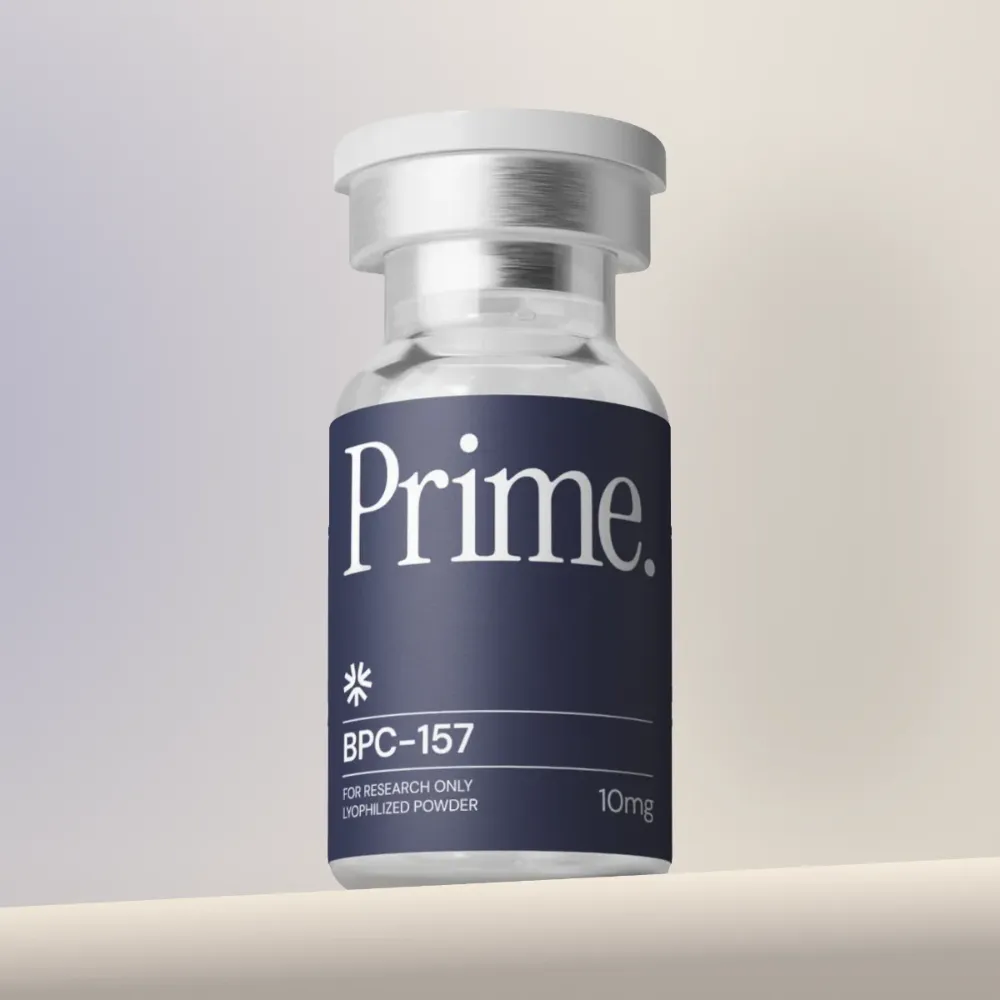
BPC-157 10mg is 10mg of BPC-157 under a crimped aluminium cap, supplied by Prime Peptides as freeze-dried powder. It’s a synthetic pentadecapeptide. It’s sold for laboratory research only.
What is BPC-157?
BPC-157 is a 15-amino-acid peptide based on a fragment of body protection compound, a protein first found in gastric juice. It’s one of the most widely studied research peptides, almost entirely in rodents.
It isn’t an approved drug in the US or Europe, and it’s on the WADA prohibited list.
The mechanism behind BPC-157
Nobody has pinned down a single receptor for BPC-157. Lab studies point to several pathways: it raises VEGF receptor expression, which feeds blood vessel growth, it interacts with the nitric oxide system, and it increases growth hormone receptor levels in tendon cells.
In cell culture it helped fibroblasts move and spread, which is part of how tissue closes a wound. Those effects are why it shows up so often in tendon, ligament and gut repair models.
BPC-157 10mg technical data
- Compound: BPC-157
- Also known as: body protection compound 15, PL 14736
- CAS number: 137525-51-0
- Molecular formula: C62H98N16O22
- Molecular weight: 1,419.5 g/mol
- Structure: Gly-Glu-Pro-Pro-Pro-Gly-Lys-Pro-Ala-Asp-Asp-Ala-Gly-Leu-Val
- Amount: 10mg per vial
- Form: lyophilized (freeze-dried) powder
- Label: Prime, For Research Only, Lyophilized Powder
- SKU: PRIME-BPC-10
- Intended use: laboratory research only
BPC-157 research findings
Most of the work comes from Predrag Sikiric’s group at the University of Zagreb. Their rodent studies report faster healing of tendon, ligament, muscle and gut injuries, and Mikus and colleagues described improved burn wound healing in mice.
Chang and colleagues reported in 2011 that BPC-157 raised growth hormone receptor expression in rat tendon fibroblasts. Controlled human data are very limited.
Every study mentioned here is indexed on PubMed, the free database run by the NIH. Try this BPC-157 search.
BPC-157 compared with similar compounds
In one line, BPC-157 is a 15-amino-acid fragment of a gastric protein, studied for new blood vessel growth and tissue repair. The compounds researchers most often weigh it against work like this:
- TB-500 is synthetic thymosin beta-4, an actin-binding peptide tied to cell migration
- GHK-Cu is a copper-binding tripeptide linked to collagen and wound remodeling
They map onto different stages of repair: new blood vessels, cell migration, inflammation and rebuilding the tissue matrix. Compare them in our healing and recovery peptides.
How to dissolve BPC-157 10mg
There are 10mg of freeze-dried powder in the vial. Divide that by the volume of diluent you add and you have the concentration. For example:
- 1mL of diluent gives 10mg per mL
- 2mL of diluent gives 5mg per mL
- 3mL of diluent gives 3.333mg per mL
Clean the rubber stopper, add diluent a little at a time along the side of the vial and roll it between your fingers until it clears. Never shake it. Add bacteriostatic water to the same order so you have it ready.
Keeping BPC-157 10mg fresh
An easy rule for BPC-157 10mg: powder in the freezer, solution in the fridge. Light and moisture are what degrade freeze-dried peptides, so leave the vial in its carton.
Let a frozen vial warm up before opening it, since cold glass pulls moisture out of the air.
How to verify a BPC-157 10mg vial
Each BPC-157 10mg vial arrives with the Prime label, which names the compound and marks it as lyophilized powder for research only. Your order confirmation lists every vial, which makes it easy to match vials to the study they belong to.
If your lab wants independent confirmation, two tests answer different questions. HPLC shows what share of the sample is the main compound, and mass spectrometry confirms that compound has the expected molecular weight.
A quick note of the order number and opening date on each vial makes troubleshooting far easier later on.
Products often ordered with BPC-157 10mg
- Glow Blend 70mg (GHK-Cu, BPC-157, TB-500), with GHK-Cu, BPC-157 and TB-500 in a single vial
- Wolverine Blend 20mg (BPC-157 and TB-500), with BPC-157 and TB-500 in a single vial
- TB-500 10mg (Thymosin Beta-4), a thymosin beta-4 peptide
- Klow Blend 80mg (GHK-Cu, BPC-157, TB-500, KPV), with GHK-Cu, BPC-157, TB-500 and KPV in a single vial
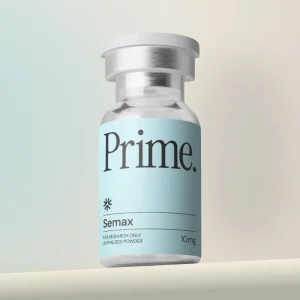
- Semax 10mg, an ACTH(4-10) analog
The rest of the range is in our healing and recovery peptides. Every section of the store is linked from the Prime Peptides home page.
BPC-157 10mg FAQ
How much is in each BPC-157 10mg vial?
10mg of freeze-dried powder per vial.
How should BPC-157 10mg be stored?
Freeze the sealed vial at -20°C. After mixing, move it to the fridge at 2 to 8°C and finish it inside roughly 28 days.
Can BPC-157 be used in people or animals?
No. Prime Peptides sells it for laboratory research only. It isn’t approved for human or veterinary use.
Is BPC-157 10mg in stock?
Yes, it’s in stock now, and shipping is free.
Where can I buy BPC-157 10mg?
Right here at Prime Peptide Store. Add it to your cart on this page and check out. Shipping is free on every order.
Order BPC-157 10mg online today
Ready to order? The compound costs $55.00, it’s in stock and shipping is free. Paying in crypto takes 15% off.
Compounds that fit the same study sit in our healing and recovery peptides.
Prime Peptides sells this product for in-vitro and laboratory research only. It isn’t a medicine, food or dietary supplement, and it can’t be given to people or animals. The FDA has not evaluated any statement on this page. Buyers must be 21 or older and qualified to handle research chemicals.
Reviews
There are no reviews yet.