
Prime Peptides BPC-157: The 10mg Vial and 3 Blends Compared
Prime Peptides BPC-157 explained: what the peptide is, the 10mg vial and the three blends that contain it, how it works in lab studies and how to store it.
What Prime Peptides BPC-157 is
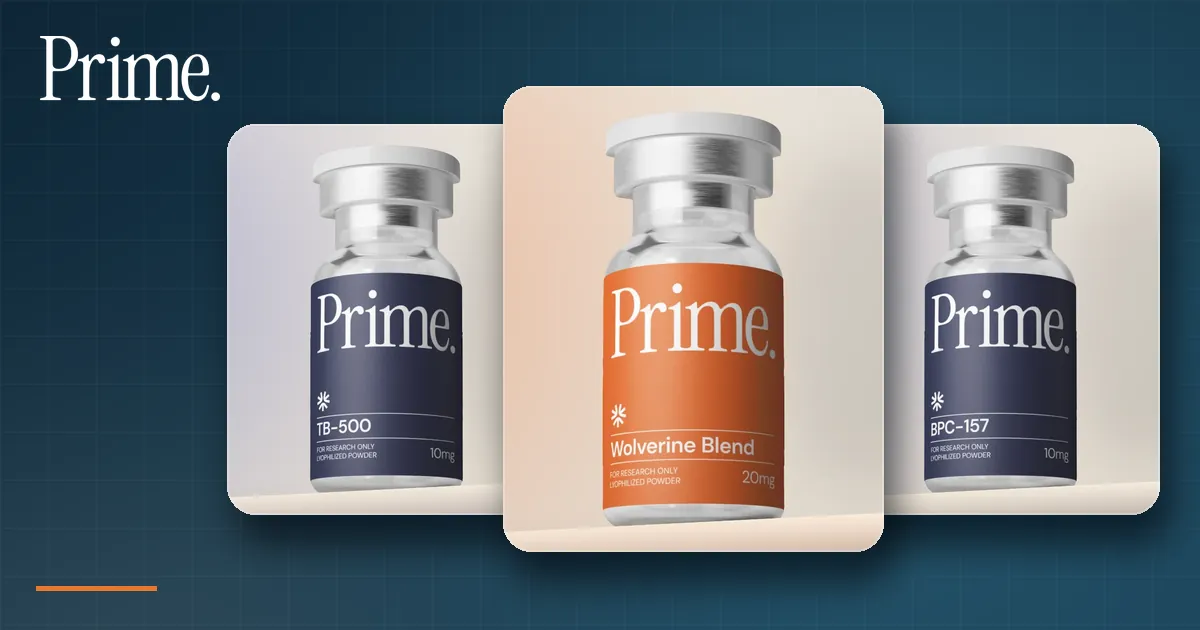
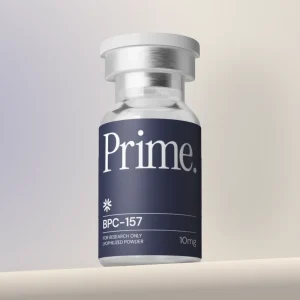
Prime Peptides BPC-157 is a 10mg vial of freeze-dried BPC-157, a 15-amino-acid peptide based on a fragment of body protection compound, a protein first found in gastric juice. It’s the most searched product in our store and one of the most studied research peptides overall, almost entirely in rodents.
The vial ships sealed, with the Prime label and a crimped cap, and it’s sold for laboratory research only. It isn’t an approved medicine anywhere.
Prime Peptides BPC-157 options: the vial and three blends
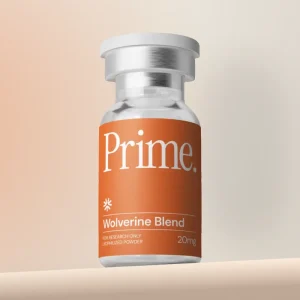
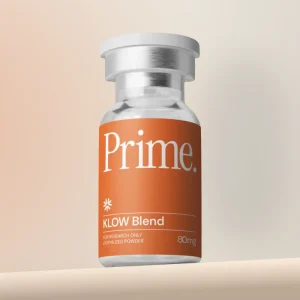
You can buy BPC-157 10mg on its own for $55.00, or as part of the Wolverine blend (BPC-157 and TB-500, 10mg each), the Glow blend (adds 50mg of GHK-Cu) and the Klow blend (adds 10mg of KPV on top). The single vial suits studies that test BPC-157 alone or need to vary the dose of each compound. The blends suit protocols that already call for the compounds together.
- BPC-157 10mg: $55.00
- Wolverine blend 20mg: $125.00
- Glow blend 70mg: $130.00
- Klow blend 80mg: $145.00
How BPC-157 works in lab studies
Nobody has pinned down a single receptor for BPC-157. Lab studies point to several pathways instead: it raises VEGF receptor expression, which feeds new blood vessel growth, it interacts with the nitric oxide system, and it affects growth hormone receptor expression in tendon cells.
Chang and colleagues reported in 2011 that BPC-157 raised growth hormone receptor expression in rat tendon fibroblasts. Most of the wider work comes from Predrag Sikiric’s group at the University of Zagreb, whose rodent studies report faster healing of tendon, ligament, muscle and gut injuries. Controlled human data are very limited, so it remains a research compound.
Prime Peptides BPC-157 next to TB-500
BPC-157 and TB-500 get compared more than any other pair in repair research. BPC-157 is tied to blood vessel growth and nitric oxide signaling, while TB-500, synthetic thymosin beta-4, binds actin and helps cells move into damaged tissue. That difference is why the two are so often studied together, and why the Wolverine blend exists. Our Prime Peptides TB-500 guide and Wolverine guide cover both sides.
Mixing and storing BPC-157
Add a sterile diluent such as bacteriostatic water slowly down the inside of the vial and swirl until it clears. With 2mL added, the 10mg vial holds 5mg per mL. Keep sealed vials at -20°C and mixed vials at 2 to 8°C, and use a mixed vial within about four weeks.
For the original studies, this PubMed search for BPC-157 from the U.S. National Library of Medicine lists the published work.
Prime Peptides BPC-157 products
All in stock and shipped free worldwide.
 BPC-157 10mgFrom $55.00
 Wolverine Blend 20mgFrom $125.00
 Glow Blend 70mgFrom $130.00
 Klow Blend 80mgFrom $145.00
Prime Peptides BPC-157 FAQ
Does Prime Peptides sell BPC-157?
Yes. Prime Peptides BPC-157 comes as a 10mg vial and in the Wolverine, Glow and Klow blends.
How much is Prime Peptides BPC-157?
The 10mg vial is $55.00, with free shipping worldwide and 15% off when you pay with crypto.
Which BPC-157 blend should I choose?
Wolverine for the classic BPC-157 and TB-500 pair, Glow if your model includes collagen work, and Klow if it includes inflammation.
Is BPC-157 for human use?
No. It is sold for laboratory research only.
Order Prime Peptides BPC-157
Every product is in stock. Add it to the cart, pay with crypto for 15% off, and shipping is free to any country.
Prime Peptides products are sold for laboratory, analytical and research use only. They aren’t for human or veterinary use, and the FDA hasn’t evaluated them. Buyers must be 21 or older.